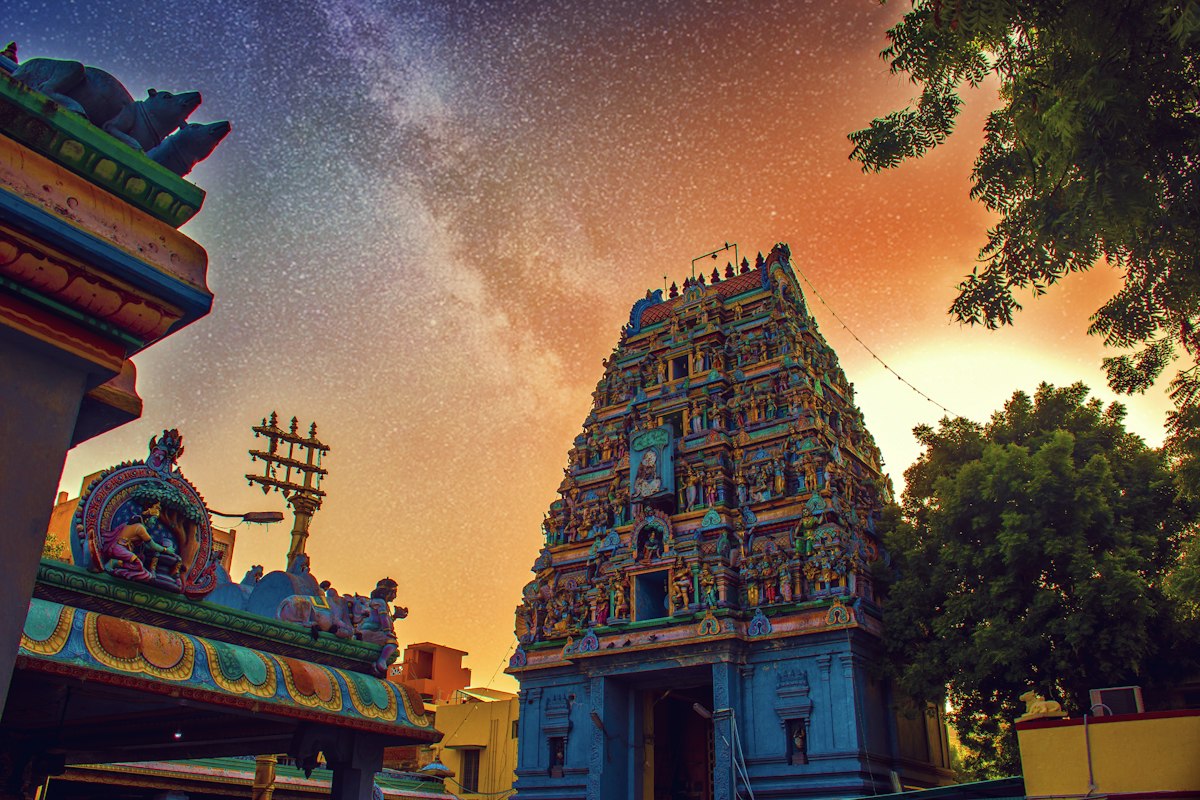
Why Mysore
Ashtanga was developed and taught in Mysore by Sri K. Pattabhi Jois. Today dedicated students travel here for months at a time to practise the traditional 'Mysore style' — self-paced, individually guided practice in a shared room.
What 'Mysore style' means
Rather than a led class, you practise the Ashtanga sequence at your own pace from memory, while the teacher moves around giving individual adjustments and new postures. It builds a deep, self-sufficient personal practice.
Who it's for
Mysore suits committed practitioners and those drawn to discipline and tradition. Some shalas welcome beginners to learn the method properly from the start, while others expect prior experience.
Best time to visit
October to March offers cooler, more comfortable weather. Many traditional shalas have set terms and require advance application, so plan ahead.
What a Mysore morning looks like
Practice starts very early — often before dawn. You arrive at the shala, roll out your mat among other practitioners, and begin the Ashtanga sequence at your own pace from memory. The room is quiet but for the sound of breath. The teacher moves around giving hands-on adjustments and, when you're ready, teaching you the next posture in the series. You finish, rest in the closing postures, and leave as others are still flowing — a deeply personal practice within a shared space.
How to prepare
Mysore rewards preparation. If you can, build a regular Ashtanga practice before you go so the early starts and self-led format feel familiar. Many committed students stay a month or longer to let the practice settle and progress. Research shalas carefully — they vary in lineage, teaching style and how they treat beginners — and apply ahead, as traditional shalas run fixed terms and can fill up.
Beyond practice
Mysore itself is a relaxed South Indian city with palaces, markets and good vegetarian food, and the long-stay practitioner community is friendly and focused. Days outside of morning practice are usually spent resting, studying, doing self-practice of philosophy or chanting, and recovering — Ashtanga is demanding, and the slower afternoons are part of how the method works.
How long to stay
Mysore rewards time. Because the practice is built slowly and the early-morning rhythm takes a while to settle into, most dedicated students come for at least a month, and many stay two or three. A shorter visit can still be worthwhile to experience the method and the city, but the real benefits — a transformed practice and the discipline that comes with it — unfold over weeks, not days. Factor this into your plans and your visa.
Is Mysore right for you?
Mysore is for the committed. It suits practitioners who love structure, discipline and tradition, and who want to study Ashtanga at its source rather than dabble. It's less suited to those seeking variety, a relaxed holiday or a gentle introduction to yoga — for that, a general retreat in Goa, Kerala or Bali makes more sense. But if Ashtanga has captured you, practising in Mysore is something close to a pilgrimage.
Find a verified school here
Browse yoga schools and retreats on YogaStay — manually verified, with secure booking and free cancellation.
Browse retreats →Frequently asked questions
What is Mysore-style yoga?
A traditional way of practising Ashtanga where you move through the sequence at your own pace from memory, receiving individual guidance from the teacher rather than following a led class.
Do I need to be advanced to study in Mysore?
Not always — some shalas teach the method to beginners, while traditional ones expect prior Ashtanga experience. Check each school's requirements before applying.
When should I go to Mysore?
October to March has the best weather. Traditional shalas often have fixed terms and require advance booking.