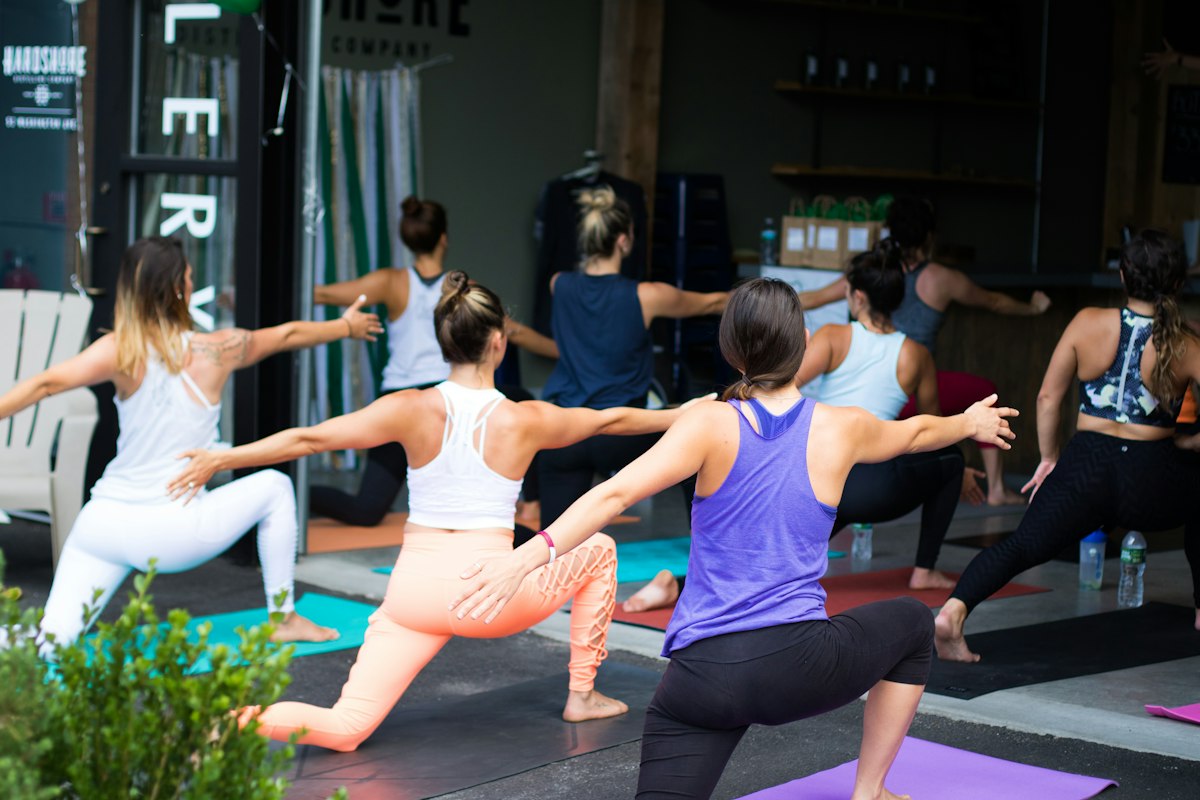
How Ashtanga works
Ashtanga follows fixed series of postures (the Primary Series first), always in the same sequence, synchronised with a specific breathing technique. The consistency lets you measure progress clearly and build a strong, repeatable practice.
Benefits
- Builds significant strength, stamina and flexibility
- Develops discipline and concentration
- Provides a clear, structured path of progression
- Strong, meditative focus through breath and gaze (drishti)
Who it's for
Ashtanga suits those who thrive on structure, discipline and a physical challenge. Beginners can start by learning the Primary Series gradually, often in a Mysore-style setting where postures are added one at a time.
Ashtanga vs Vinyasa
Vinyasa grew out of Ashtanga but varies its sequences every class; Ashtanga keeps the same fixed series, making it more disciplined and repetitive by design. Mysore, India, is its traditional home.
The series
Ashtanga is organised into set sequences of increasing difficulty. Almost everyone spends a long time on the Primary Series (Yoga Chikitsa, 'yoga therapy'), which builds strength and flexibility and realigns the body. The Intermediate Series (Nadi Shodhana) works deeper into the nervous system and backbends, and the Advanced Series are reserved for very experienced practitioners. You don't move on until the current series is well established, which is what gives Ashtanga its clear sense of progression.
Led class vs Mysore style
There are two ways to practise. In a led class, the teacher calls the count and the whole room moves through the sequence together — useful for learning the rhythm and the breath count. In Mysore style, you practise the sequence at your own pace from memory while the teacher gives individual adjustments and assigns new postures. Mysore style is the traditional method and the best way to build a deep, self-sufficient practice.
Tips for starting
Begin in a beginner-friendly or Mysore-style setting where you can learn the sequence gradually, posture by posture, rather than being thrown into the full series. Consistency is everything in Ashtanga — even a few mornings a week builds remarkable strength over time. Respect rest days (traditionally including the new and full moon), protect your shoulders and wrists as you build the vinyasa transitions, and be patient: the method is designed to unfold slowly.
Where Ashtanga comes from
Ashtanga as practised today was developed and taught in Mysore, India, by Sri K. Pattabhi Jois through the twentieth century, based on teachings from his own guru, Krishnamacharya — often called the father of modern yoga. The name references the 'eight limbs' (ashtanga) of classical yoga philosophy. Its rigorous, sequence-based method went on to inspire most of the dynamic 'flow' styles taught in studios today, making it one of the most influential systems in modern yoga.
The role of breath and bandhas
What turns Ashtanga from a workout into a practice is its internal techniques. A specific deep, audible breath (ujjayi) is held throughout, a steady gaze (drishti) focuses each posture, and subtle internal engagements called bandhas support the body and the energy of the practice. Together these create the 'tristana' — breath, gaze and posture working as one — which is what gives a committed Ashtanga practice its meditative, almost trance-like quality despite the physical intensity.
Find a class in this style
Browse verified schools and retreats on YogaStay and filter by the style that calls to you.
Browse retreats →Frequently asked questions
Is Ashtanga yoga good for beginners?
Yes, if you enjoy structure — beginners typically learn the Primary Series gradually, often one posture at a time in a Mysore-style class.
Why is Ashtanga the same every time?
Practising the same set sequence lets you build strength and measure progress clearly, and turns the practice into a moving meditation.
Is Ashtanga harder than Vinyasa?
Ashtanga is generally more demanding and disciplined because of its fixed, progressively challenging series, though intensity varies by class and teacher.