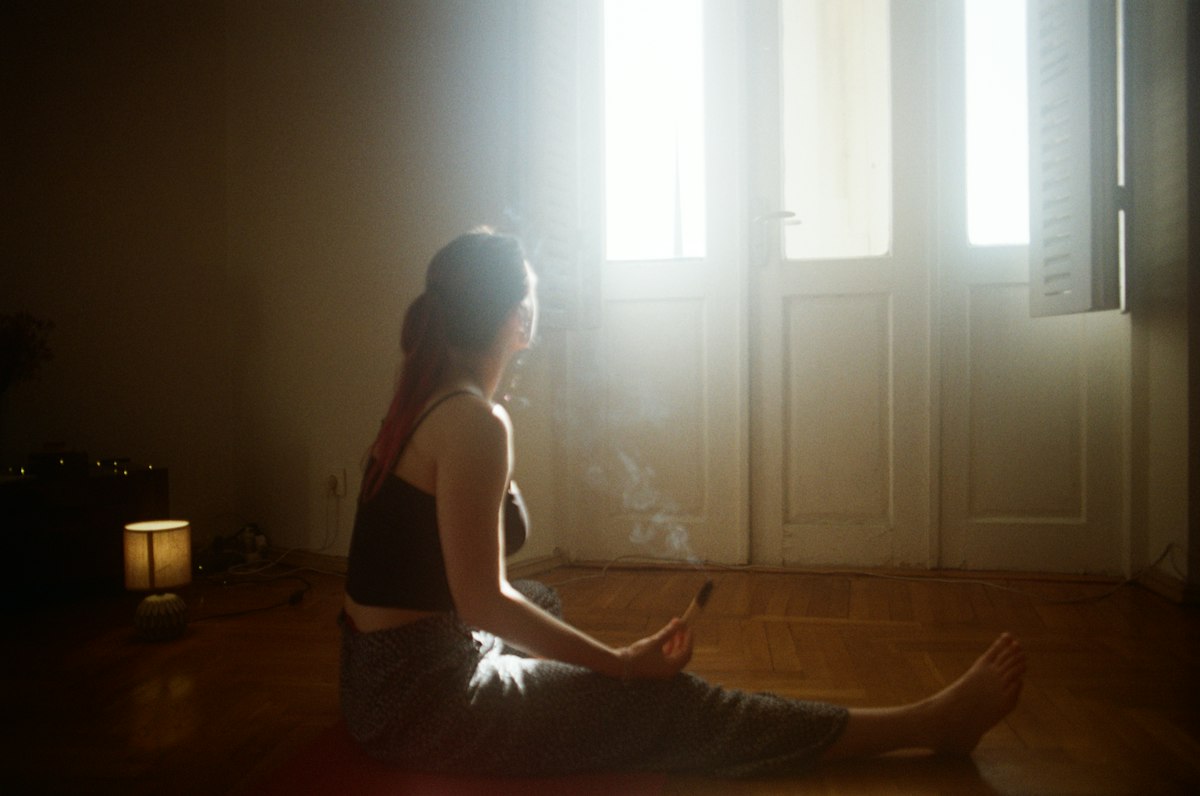
What somatic yoga actually is
"Somatic" simply means of the body, as felt from the inside. Where a typical class chases a shape — get the pose to look right — somatic yoga chases a felt sense: how a movement actually feels as you do it. The movements are slow, small and exploratory, often barely visible, and there's no goal to reach or pose to nail.
In practice that means gentle, repetitive movements done with full attention — rocking the pelvis, slowly circling a joint, letting the spine curl and uncurl — paired with long, easy breathing. The point isn't to stretch further or build strength. It's to get out of your head, back into your body, and teach an overstimulated system that it's safe to settle. If you've done restorative or yin yoga, somatic yoga lives in the same calm, unhurried family.
The "nervous-system reset" — what's real, and what's hype
Here's the honest version, because the internet oversells this. Your autonomic nervous system has two broad modes: sympathetic ("fight-or-flight" — alert, revved up) and parasympathetic ("rest-and-digest" — calm, recovering). Chronic stress keeps many of us stuck too far toward the sympathetic side. Slow, gentle movement and — crucially — slow breathing with long exhales genuinely nudge you toward the parasympathetic side: heart rate slows, blood pressure eases, and you feel calmer. That part is well established.
You'll also see somatic yoga wrapped in the language of the vagus nerve and "polyvagal theory." Slow breathing, humming and chanting do stimulate the vagus nerve, and that's real. But polyvagal theory itself — the bigger framework it's often sold with — remains a theory, and parts of it are genuinely disputed by researchers. So treat the buzzwords lightly. You don't need to believe any particular model for the practice to work: the calm you feel afterwards is real, whatever we call the mechanism.
Bottom line: somatic yoga is a legitimately good tool for everyday stress and winding down. It is not a cure, and it's not a substitute for professional care (more on that below).
Why it's everywhere in 2026
Somatic movement, "nervous-system regulation" and vagus-nerve work are among the fastest-rising wellness searches this year — a clear "bottom-up" shift toward calming the body rather than only talking through the mind. After years of high-intensity everything, a slow, self-soothing practice that asks nothing of you is exactly what a burnt-out audience is reaching for. If you've felt the pull toward slower yoga lately, you're not imagining it — it's a genuine movement.
A gentle 15-minute beginner reset
Do this sequence in a quiet, dimly lit space where you won't be interrupted. Move slowly — everything here should feel easy, never effortful. If anything hurts or agitates you, stop and rest. The order matters: we down-shift the breath, mobilise gently, then rest.
1. Extended-exhale breathing (2–3 minutes)
Sit or lie comfortably. Breathe in through the nose for a count of about four, then breathe out slowly for a count of about six to eight. The long exhale is the active ingredient — it's the single most reliable way to tip yourself toward calm. Don't strain for the counts; just make the out-breath noticeably longer than the in-breath, and let it soften with each round.
2. Slow Cat–Cow (2 minutes)
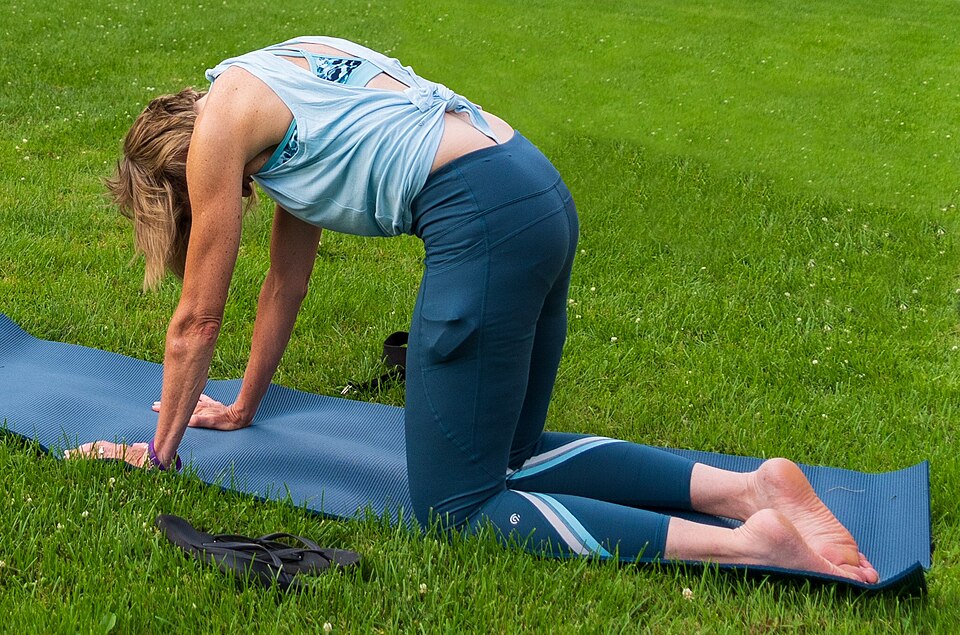
On all fours, let the spine slowly curl and uncurl with the breath — belly drops and chest lifts as you inhale, back rounds as you exhale. Go slower than feels natural, and let it get sloppy and organic rather than precise. This is somatic movement: you're feeling the spine move, not performing a pose. A handful of unhurried rounds is plenty.
3. Humming breath — Bhramari (1–2 minutes)
Breathe in, then hum gently on the way out — a soft, steady "mmm" until the breath runs out. The vibration in the throat and face is soothing, and humming naturally lengthens the exhale, so it stacks two calming effects at once. A few rounds is enough to feel your shoulders drop.
4. Supported Child's Pose (2–3 minutes)
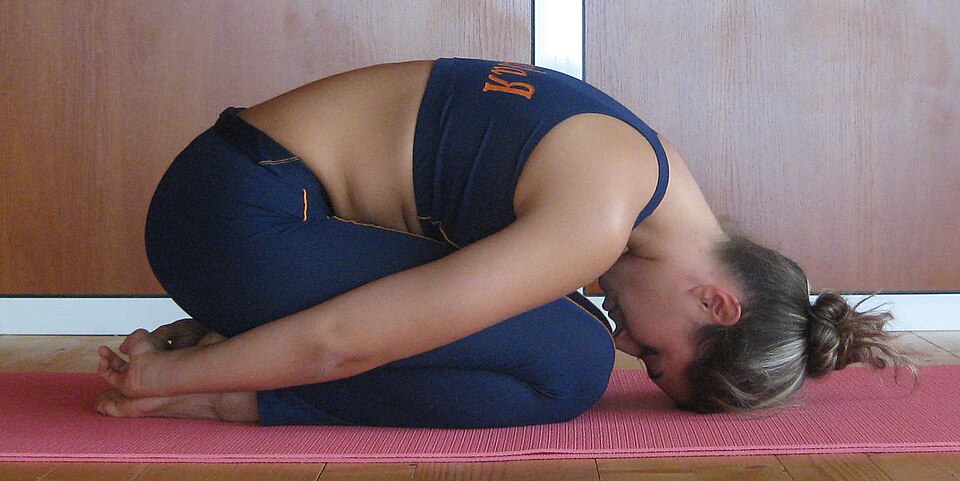
Knees wide, hips sinking back toward the heels, forehead resting down. For a truly restful version, drape your torso over a bolster or a couple of stacked cushions so you're fully supported and can let go completely. Breathe into the back of the ribs and stay as long as it feels good — this is the classic "reset button" pose for a reason.
5. Legs-up-the-wall (3–5 minutes)
Sit side-on to a wall, then swing your legs up it and lie back so your body makes an L. Rest your arms wide, close your eyes, and simply breathe. It's one of the most reliably calming shapes in all of yoga — gentle on the legs, quiet for the mind, and impossible to get "wrong." If your lower back complains, shuffle your hips a little further from the wall.
6. Rest with an eye pillow — Savasana (3–5 minutes)
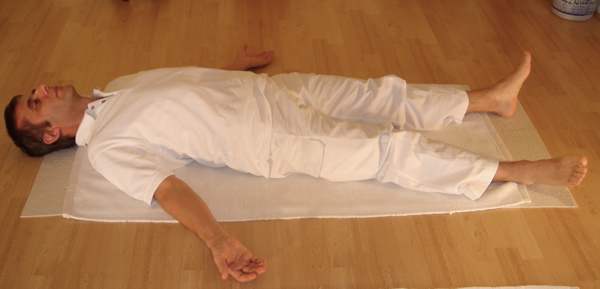
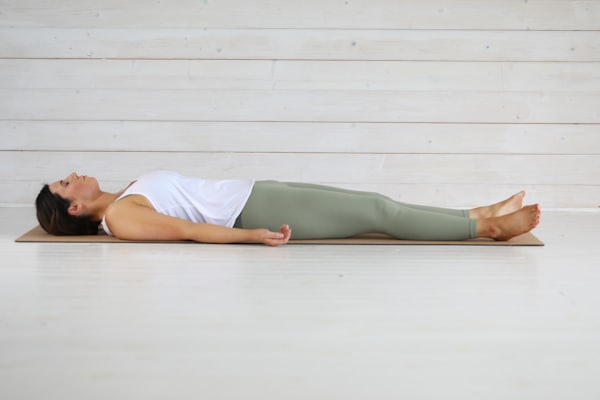
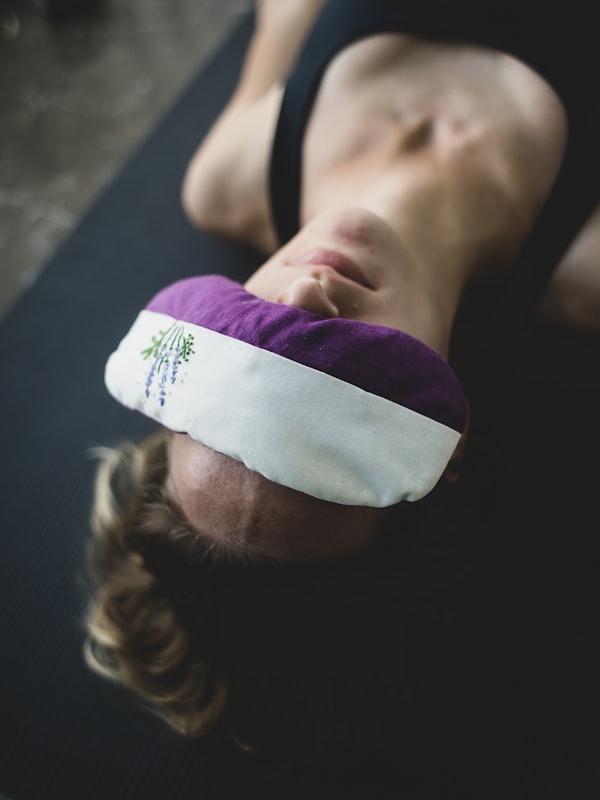
Lie flat, let the feet fall open, and rest a weighted eye pillow over your eyes if you have one — the gentle weight deepens the sense of safety and helps the eyes and face let go. Do nothing. Let the breath return to its own rhythm. This final stillness is where the reset really lands, so don't skip it or cut it short.
Who it's for — and an honest caution
Somatic yoga suits almost everyone, and it's especially welcome if you're stressed, tired, wired-but-exhausted, new to yoga, or simply want something gentle. Because it's low-intensity and adaptable, it's also friendly for older bodies, pregnancy (with a teacher's guidance) and days when a strong practice is too much.
One honest caveat: somatic and "trauma-informed" yoga are sometimes marketed as a way to heal trauma or treat anxiety and depression. Gentle movement and breath can genuinely help you feel calmer and more grounded, and they're a good complement to proper care — but they are not a replacement for a doctor, therapist or trauma specialist. If you live with a diagnosed mental-health condition or a history of trauma, treat this as support alongside professional help, and go gently — for some people, dropping into the body can bring up a lot. There's no prize for pushing through; ease is the whole point.
How to make it a habit
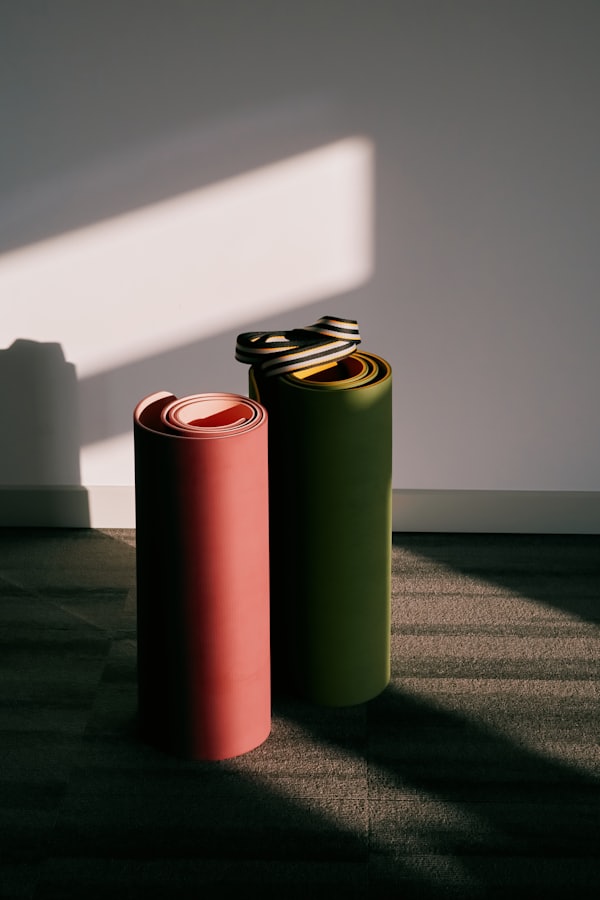
The beauty of somatic yoga is how little it asks. Ten to fifteen minutes in the evening, or even a single practice from this list — three minutes of long exhales, or legs-up-the-wall before bed — is enough to shift your evening. Keep a mat unrolled somewhere you'll see it, dim the lights, and let it become the way you tell your body the day is done.
Want to go deeper? A slow, restorative-focused retreat is one of the loveliest ways to reset properly — our guide to yoga for stress & burnout covers where to go and what to look for. And if you're building a daily habit this month, pair this with the September reset.
Ready to find your retreat?
Browse verified yoga schools and retreats worldwide — accommodation included, no booking fees.
Browse retreats →Frequently asked questions
What's the difference between somatic yoga, yin and restorative yoga?
They overlap and all live in the slow, calming family. Restorative yoga uses props to hold you fully supported in stillness; yin holds longer stretches to work deep connective tissue; somatic yoga emphasises slow, exploratory movement guided by how it feels inside rather than by any pose. Many gentle classes blend all three.
Does somatic yoga really 'reset' the nervous system?
Slow movement and long-exhale breathing genuinely shift you toward the calm, 'rest-and-digest' side of the nervous system — that part is well established, and you'll feel it. The more dramatic 'vagus nerve' and 'polyvagal' claims are popular but scientifically debated, so treat the buzzwords lightly. The calm is real; the exact mechanism is still being studied.
Can somatic yoga help with anxiety or trauma?
It can help you feel calmer and more grounded and is a good complement to professional care — but it is not a substitute for a doctor, therapist or trauma specialist. If you have a diagnosed condition or trauma history, use it alongside proper help and go gently.
How often should I practise?
As often as you like — it's gentle enough for daily practice. Even 10–15 minutes in the evening, or one calming practice like legs-up-the-wall before bed, makes a real difference.