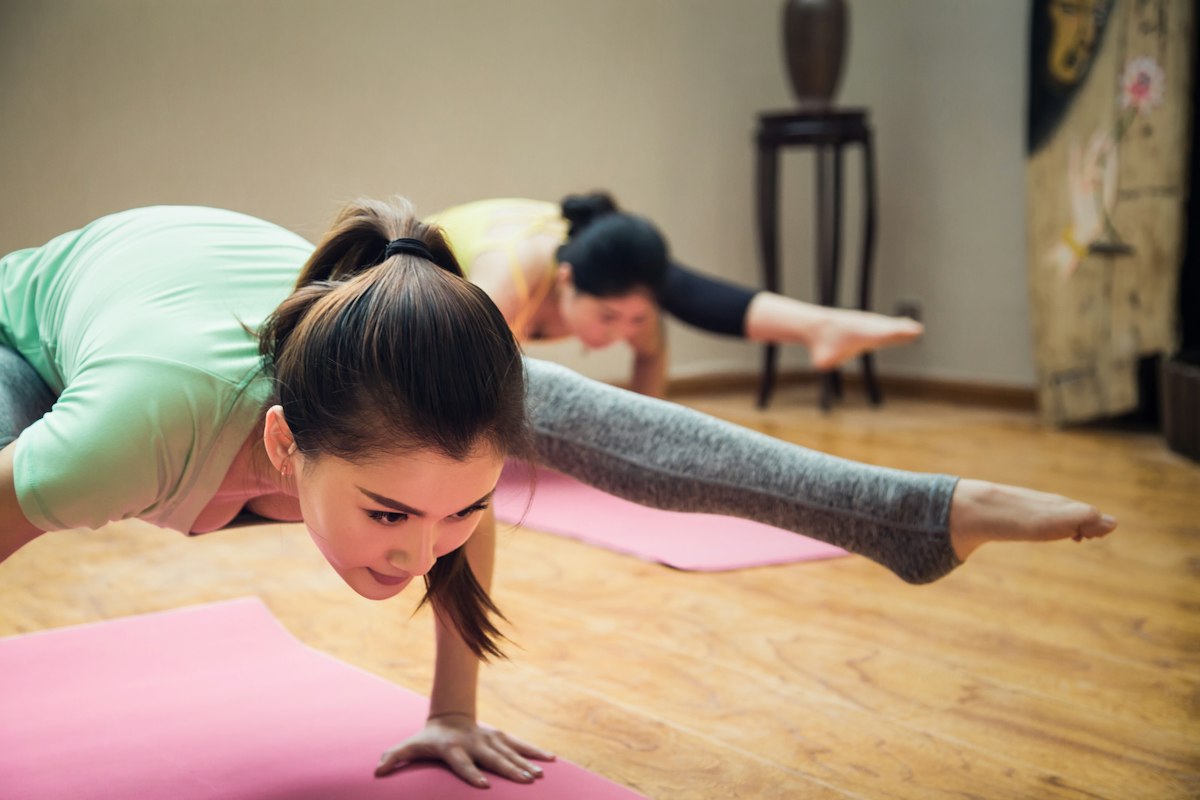
How Hatha works
In a Hatha class you move at a measured pace, holding each posture (asana) for several breaths with attention to alignment, often combined with breathing exercises (pranayama). The slower tempo makes it one of the best places to learn the fundamentals.
Benefits
- Builds foundational strength and flexibility
- Teaches correct alignment and breathing
- Calms the mind and reduces stress
- An ideal entry point to all other styles
Who it's for
Hatha is excellent for beginners and for anyone who wants to understand the building blocks of a posture rather than flow quickly past it. Experienced practitioners use it to refine alignment and deepen the breath.
Hatha vs other styles
'Hatha' technically covers all physical yoga, but as a class label it usually means a slower, static practice — gentler than dynamic Vinyasa and more active than purely restorative Yin.
What a class looks like
A Hatha class typically begins with centring and breath awareness, moves through gentle warm-ups, then works methodically through standing, seated and sometimes reclining postures, each held for several steady breaths. Because the pace is unhurried, the teacher can explain alignment in detail and you have time to feel where you are in a pose. Classes usually close with breathing practice (pranayama) and a final relaxation, leaving you calm rather than wrung out.
Common Hatha poses
Hatha is where most people first learn the foundational postures: Mountain Pose, the Warriors, Triangle, Tree, Cobra, Bridge, seated forward folds and gentle twists, finishing with savasana. Because each is held and explained, Hatha is the ideal place to build a correct, safe understanding of these shapes that then carries into every other style you might try.
Tips for beginners
Hatha is one of the most beginner-friendly styles, so there's little to fear. Focus on your breath and on alignment rather than on how deep you can go, use props like blocks and straps without hesitation, and never force a stretch. A steady twice-weekly Hatha practice builds the strength, flexibility and body awareness that make everything else — Vinyasa, Ashtanga, even a retreat abroad — far more accessible.
Where Hatha comes from
Hatha is the oldest branch of physical yoga, with roots in texts written centuries ago that describe postures, breathing and cleansing practices designed to prepare the body and mind for meditation. The word is often translated as the union of opposites — 'ha' (sun) and 'tha' (moon). Almost every modern physical style, from Vinyasa to Ashtanga to Iyengar, ultimately descends from this Hatha tradition, which is why learning it gives you such a solid foundation for everything else.
More than postures
Traditional Hatha is broader than the poses alone. A fuller class may include pranayama (breath control), simple cleansing techniques and meditation, reflecting yoga's original aim of steadying the mind as much as strengthening the body. This is part of why Hatha is so well suited to retreats and to anyone wanting to understand yoga's roots — it teaches not just how to move, but why the practice is structured the way it is, giving depth that carries into any style you go on to explore.
Find a class in this style
Browse verified schools and retreats on YogaStay and filter by the style that calls to you.
Browse retreats →Frequently asked questions
Is Hatha yoga good for beginners?
Yes — its slow, alignment-focused pace makes Hatha one of the best styles for learning the foundations of yoga.
Is Hatha yoga a good workout?
It builds strength and flexibility steadily. It's gentler than fast flows but holding postures can be more challenging than it looks.
What's the difference between Hatha and Vinyasa?
Hatha holds postures at a slower pace; Vinyasa links postures into continuous, breath-led flowing sequences.