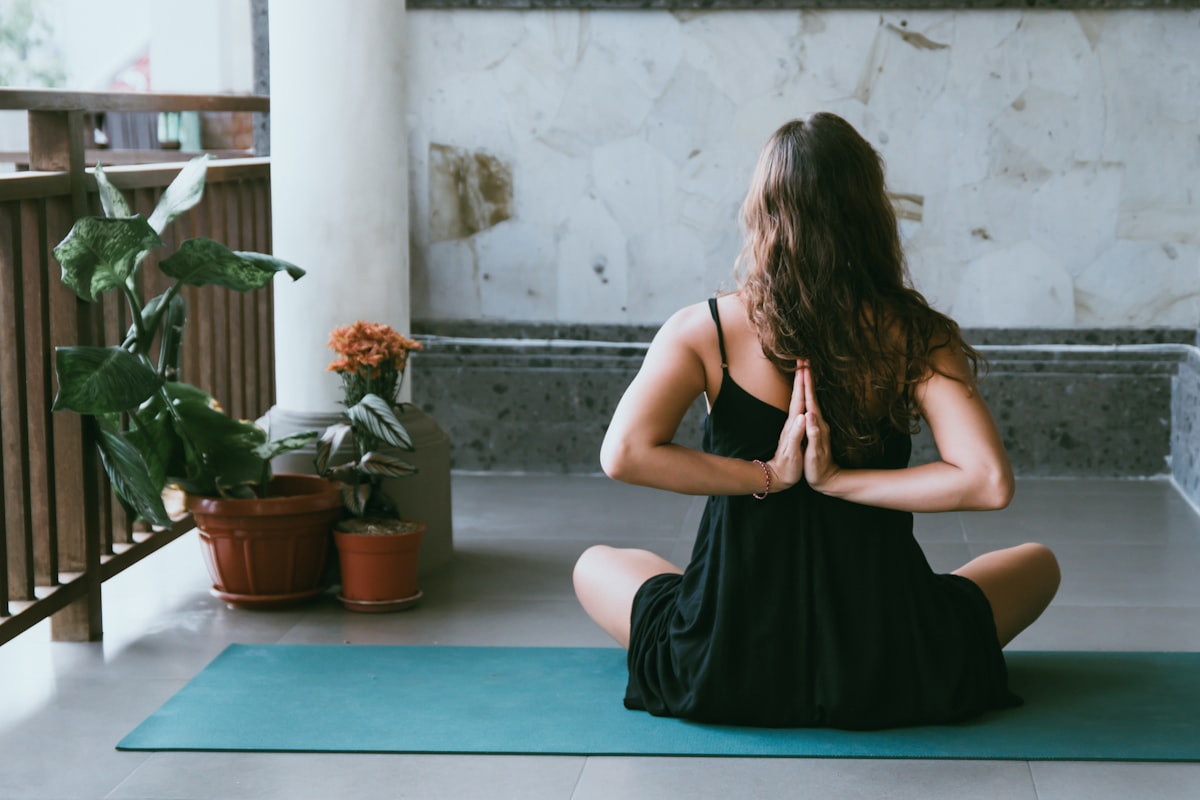
1. Traditional Ashtanga Yoga Shala — Phuket
Tucked into a residential corner of Chalong rather than a beach strip, TAYSP is the most traditional school on this list — daily Mysore-style self-practice and led primary series, with pranayama, meditation and yoga nidra alongside. Rich Harding and Sofya Linkova keep it deliberately small, capping courses at ten students, and also run Ashtanga intensives and therapy-led detox programmes with accommodation on site.
Speciality: authentic Mysore-style Ashtanga in a small, unshowy shala. Website: taysp.com.
2. Vikasa Yoga — Koh Samui
Probably Thailand's best-known yoga destination, Vikasa occupies a dramatic cliffside site on Samui's south coast, with open-air shalas stepping down towards the Gulf. It runs teacher trainings and shorter retreats, and its ocean-facing setting has made it a fixture on international best-of lists.
Speciality: teacher training and retreats in a spectacular clifftop setting. Website: vikasayoga.com.
3. Samma Karuna — Koh Phangan
In Srithanu, the village at the heart of Koh Phangan's yoga scene, Samma Karuna is a self-development school as much as a yoga one — deliberately non-dogmatic, with healing and personal-growth work woven through the curriculum. Trainings come with accommodation, a teaching internship and ongoing access to classes.
Speciality: non-dogmatic teacher training with a strong self-development and healing focus. Website: sammakaruna.org.
4. Orion Healing Centre — Koh Phangan
One of Srithanu's longest-standing centres, Orion built its reputation on detox and fasting programmes paired with a full daily yoga schedule. It's a good fit if you want the practice to sit inside a broader reset — cleansing, breathwork and meditation rather than asana alone.
Speciality: detox and fasting programmes alongside daily yoga and teacher training. Website: orionhealing.com.
5. Wonderland Healing Center — Koh Phangan
A purpose-built retreat centre inland from Chaloklum, Wonderland has a two-storey shala, a pool, a herbal steam sauna and its own vegan restaurant, with both dorm and private rooms. Beyond the standard 200-hour course it runs aerial yoga, a 100-hour yin training and trauma-aware teaching modules.
Speciality: yoga and detox retreats with unusually broad specialist training options. Website: wonderlandhc.com.
6. YogaSutra Studio — Bangkok
Established in 2003 and one of the capital's pioneering studios, YogaSutra's Sathorn branch sits on the 32nd floor of Sathorn Nakorn Tower — a practice room in the sky with city views — with a second branch on Sukhumvit. Twenty-plus teachers cover a varied weekly timetable, and there's a teacher-training school alongside the drop-in studio.
Speciality: a serious city studio with a wide timetable and remarkable views. Website: yogasutrathai.com.
7. Wild Rose Yoga — Chiang Mai
Hidden down a lane behind Chiang Mai Gate Market in an antique teak market house, Wild Rose has taught daily classes for over fifteen years, led by experienced Thai teachers. Classes are capped at thirteen students and book out, so reserve ahead — the reward is a genuinely local, unhurried practice inside the Old City.
Speciality: small, warm, teacher-led classes with real Chiang Mai character. Website: wildroseyoga.org.
8. Oasis Yoga Bungalows — Koh Lanta
One of Koh Lanta's original studios and the anchor of the island's yoga scene, Oasis runs an open-air shala in tropical gardens with the fullest schedule on the island — morning Vinyasa through to sunset Yin — plus bungalows on site if you want to stay and practise daily.
Speciality: a relaxed Andaman-coast studio with rooms attached for a self-directed retreat. Website: oasisyogabungalows.com.
9. Ocean Sound Dive + Yoga — Koh Tao
Koh Tao is Thailand's diving island, and Ocean Sound is the school that pairs the two properly: a fully equipped open-air studio running Hatha, Vinyasa and Yin with internationally certified teachers, on a timetable deliberately built around dive schedules. Small classes mean plenty of individual attention.
Speciality: quality yoga that fits around diving, in small, attentive classes. Website: oceansoundkohtao.com.
10. Absolute Sanctuary — Koh Samui
A Moroccan-styled wellness resort above Chaweng, Absolute Sanctuary is the polished end of the Thai scene — structured detox, Pilates and yoga programmes with nutrition and spa treatments included, in proper hotel comfort. Choose it when you want a guided wellness programme rather than a rustic shala.
Speciality: structured detox and wellness programmes with yoga, at resort standard. Website: absolutesanctuary.com.
How to choose your Thailand school
Start with geography, because Thailand's regions offer genuinely different experiences. Koh Phangan — specifically Srithanu — is the country's spiritual epicentre, where you'll find the deepest concentration of teacher trainings, detox centres and alternative healing; it suits long stays and inner work. Koh Samui is more comfortable and polished, good for a shorter retreat you can fly straight into. Phuket pairs easy international access with serious, structured training. Koh Lanta and Koh Tao are quieter and cheaper, better for a relaxed daily practice than an intensive. Chiang Mai trades beaches for mountains, temples and a slower, more studious mood, while Bangkok is where to keep a city practice going between trips.
Then match the format to your goal. For a teacher training, Vikasa, Samma Karuna, Wonderland and TAYSP are the established names — check the Yoga Alliance registration, the daily timetable and the class size before you book. For a reset, Orion and Absolute Sanctuary are built around detox and wellbeing. For drop-in classes while you travel, Wild Rose, YogaSutra, Oasis and Ocean Sound all welcome visitors. One practical note: the Gulf islands (Phangan, Samui, Tao) and the Andaman coast (Phuket, Lanta) have opposite rainy seasons, so if weather matters, check which coast suits your dates.
What to bring
Schools in Thailand almost always provide mats, but the tropics add their own demands — heat, humidity and a lot of sweat. A few things are worth packing whether you're doing a month-long training or a week of drop-ins.
The bottom line
Thailand's real strength is range: for the price of a week in Europe you can spend a month training on Koh Phangan, reset on Samui, or simply practise every morning on Koh Lanta before the heat arrives. The ‘best’ school is the one whose island, intensity and style match what you actually want from the trip — so be honest about whether you're after deep study, a genuine rest, or just good classes near a beach.
A word of caution: Thailand's yoga scene is largely unregulated, and quality varies enormously between a long-established school and a new operation with a good website. Check Yoga Alliance registration for trainings, read recent reviews rather than testimonials, and confirm dates and prices directly with the school before you send a deposit. YogaStay verifies yoga schools and retreats so you can book with confidence — and if you're still choosing a style, our guides to Ashtanga, Vinyasa and Yin are a good place to start, along with how to choose a yoga retreat.
Ready to find your retreat?
Browse verified yoga schools and retreats worldwide — accommodation included, no booking fees.
Browse retreats →Frequently asked questions
Where is the best place in Thailand for yoga?
Koh Phangan — and specifically the village of Srithanu — is the heart of Thailand's yoga scene, with the greatest concentration of teacher trainings, detox centres and alternative healing. Koh Samui is the most comfortable option for a shorter retreat, Phuket has the most structured teacher trainings, and Chiang Mai offers a quieter, more studious alternative in the north.
Is Thailand a good place to do a yoga teacher training?
Yes — it is one of the most popular destinations in the world for a 200-hour course, largely because it combines experienced international schools with low living costs and easy travel. Vikasa on Koh Samui, Samma Karuna and Wonderland on Koh Phangan, and the Traditional Ashtanga Yoga Shala in Phuket are among the established names. Always check the school's Yoga Alliance registration before booking.
How much does a yoga teacher training in Thailand cost?
Most 200-hour courses in Thailand fall somewhere between roughly US$1,500 and US$3,500, usually including accommodation and often meals. Price mostly tracks the standard of accommodation rather than the teaching, so compare what is actually included — room type, meals, materials and any extra certification fees.
When is the best time of year to do yoga in Thailand?
It depends which coast you choose, because they have opposite rainy seasons. The Andaman side (Phuket, Koh Lanta) is driest from roughly November to April, while the Gulf islands (Koh Samui, Koh Phangan, Koh Tao) are wettest around October to December. Chiang Mai is best from November to February, avoiding the hot season and the spring burning period.