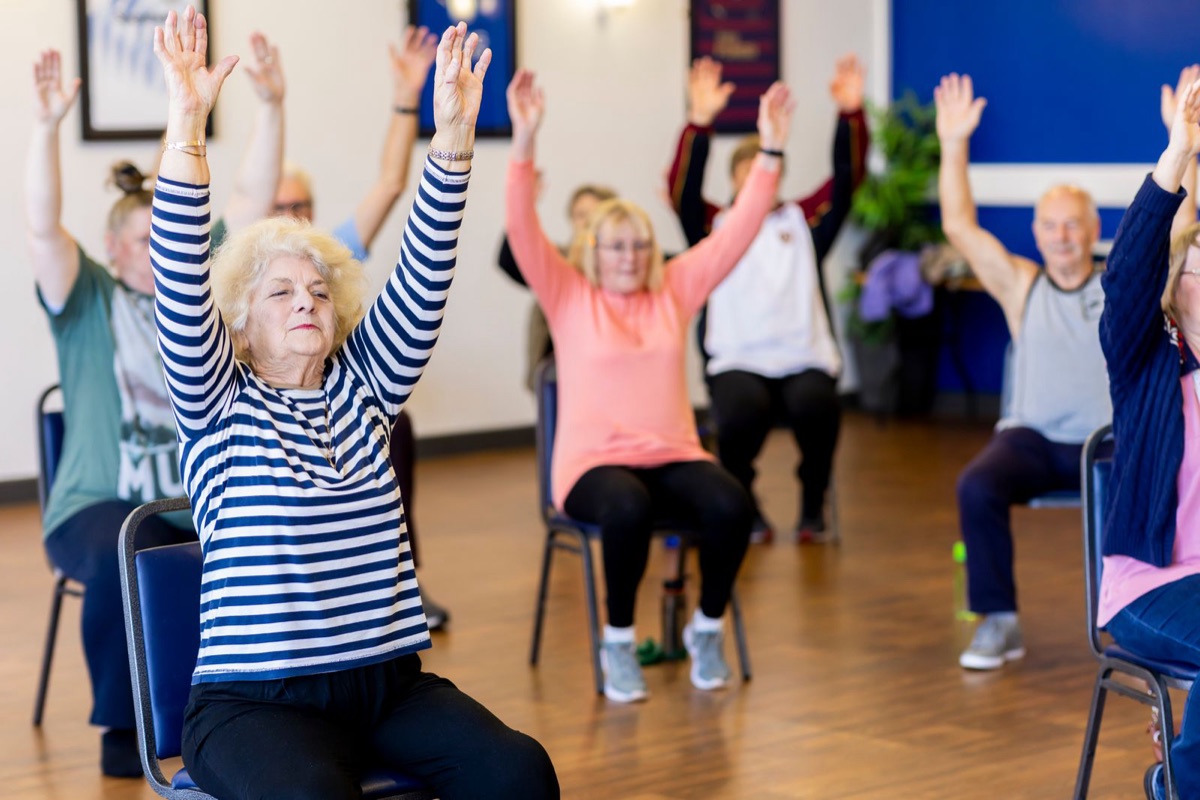
Why it matters more after 50, not less
From middle age the body starts losing muscle and the sense of balance becomes less sharp, slowly enough that most people only notice when something goes wrong. Falls are the second leading cause of unintentional injury deaths worldwide, and adults over 60 suffer the greatest number of fatal falls, according to the World Health Organization.
Yoga is unusual among forms of exercise because it trains balance, strength and flexibility in the same session — and it can be made as gentle as you need, down to a practice done entirely in a chair. That adaptability is the whole point. You are not trying to reach a shape; you are trying to keep doing the things you want to do for as long as possible.
What the research shows
In a commentary published in June 2026, the WHO summarised the evidence on yoga and healthy ageing. The findings worth knowing:
- Balance, mobility and strength. Gentle movement combined with breathing supports the balance, flexibility and strength that keep older people active and independent. In a randomised trial in older adults, yoga improved functional fitness as much as a stretching-and-strengthening programme did.
- Back pain. In a randomised trial of 320 adults with chronic low back pain, published in the Annals of Internal Medicine, a 12-week yoga programme worked as well as physical therapy, with the benefit lasting a year.
- Mood, anxiety and fatigue. A large trial presented at the 2026 ASCO conference found that a month of gentle yoga, alongside standard care, improved mood and reduced anxiety and fatigue in cancer survivors.
- The brain. Evidence is growing for benefits to memory and possibly a slower decline in thinking skills, though this is the least settled of the four.
What it can't do
It is worth being honest about the limits. Most of these effects are real but modest — a 2026 review of 30 trials on stress and anxiety, for example, found a small benefit rather than a dramatic one. Yoga sits alongside medical care; it does not replace medication, physiotherapy or a doctor's advice for a specific condition.
Nor is it the only exercise you need. Its great strengths are balance and mobility. For your heart and lungs, you still want something that raises your breathing rate, such as brisk walking, cycling or swimming.
Chair yoga counts
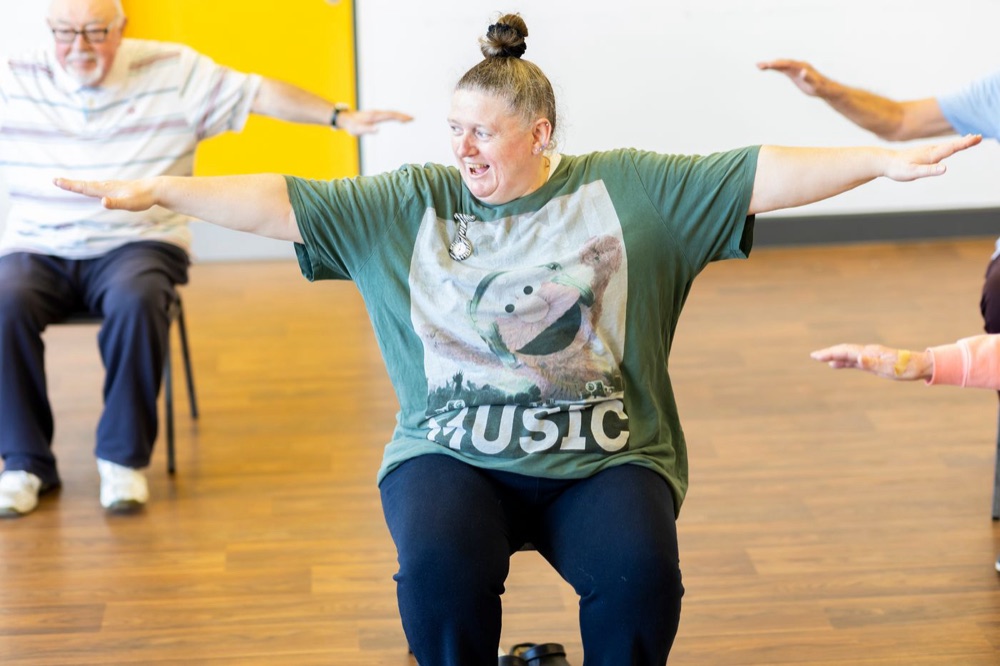
If getting up and down from the floor is difficult, or your balance is not what it was, start in a chair. Chair yoga is not a lesser version of the real thing: seated twists, arm raises, gentle backbends and breathing work the same muscles and joints, and many standing poses can be done holding the back of a chair for support.
Use a sturdy chair without wheels, placed against a wall so it cannot slide, and sit near the front edge with both feet flat on the floor.
A gentle 15-minute sequence to start
This is a starting point, not a prescription. Move slowly, breathe through your nose if you can, and stop anything that causes sharp pain. Our guide to the top 10 poses for beginners explains several of these step by step.
- Seated breathing (2 minutes). Sit tall and lengthen each out-breath a little beyond the in-breath. It is the quickest way to settle the nervous system.
- Seated Cat–Cow (1 minute). Hands on knees: arch the chest forward as you breathe in, round the back gently as you breathe out.
- Mountain Pose with arm raises (1 minute). Stand tall, feet hip-width apart, and lift the arms overhead as you breathe in and lower them as you breathe out.
- Warrior II with the chair (2 minutes). Stand side-on to a chair and rest a hand on it if you need to. Build strength in the legs without straining the knees: keep the front knee over the ankle.
- Tree Pose at the wall (2 minutes). One hand on the wall, the other foot resting on the ankle or calf — never on the side of the knee. This is the single best balance drill there is.
- Bridge (2 minutes). Lying on your back, knees bent, lift the hips a few inches. It strengthens the glutes and the back of the legs, which do much of the work of getting out of a chair.
- Legs up the wall or on a chair (3 minutes). Lie on your back with your calves resting on a chair seat. Restful, and kind to tired legs.
- Savasana (2 minutes). Lie still, with a cushion under your knees if your lower back prefers it.
Balance is the skill to train most
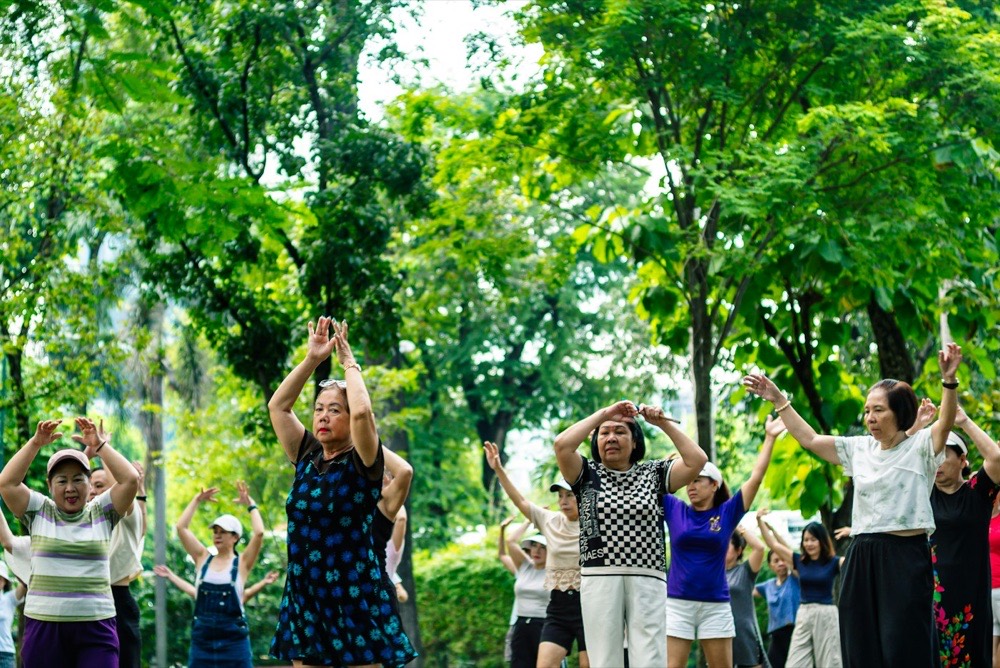
If you only take one thing from this guide, make it this: practise balancing on purpose, a little, most days. Standing poses on one leg, slow weight shifts and simply standing still with your eyes softly focused all train the reflexes that catch you when you trip.
Progress in small steps. Start with a hand on the wall, then a fingertip, then hover the hand just off it. When a pose feels steady for half a minute, make it a little harder — not before.
Poses to treat with care
Yoga is low-risk compared with most exercise, but it is not risk-free. A 2026 review of injuries and adverse events in yoga found the highest rates linked to headstands and forceful breathing exercises, and to Bikram, Ashtanga and Hatha styles. After 50, and with any of the conditions below, talk to your doctor first and tell your teacher before class:
- Headstand and shoulderstand. They load the neck heavily. They are not necessary for any of the benefits above; leave them out unless a teacher who knows you suggests otherwise.
- Forceful breathing (such as Kapalabhati or Bhastrika) if you have high blood pressure or a heart condition. Slow, even breathing gives the calming benefit without the strain.
- Deep forward folds and strong twists if you have osteoporosis or low bone density. Bone-health guidance generally advises keeping the spine long and avoiding loaded rounding of the back.
- Head-below-heart poses if you have glaucoma, as they raise pressure in the eyes.
- Hot yoga if you have heart problems, are sensitive to heat or take medication that affects how you sweat or regulate temperature.
How much, and how often
The WHO recommends that adults aged 65 and over do at least 150 minutes a week of moderate activity, muscle-strengthening work on two or more days, and balance and strength training on three or more days a week (WHO guidelines on physical activity). Yoga is one of the easiest ways to cover that last part.
In practice, 15 to 20 minutes on most days does more than one long class a week. Pair it with regular walking and you have most of a well-rounded routine. Our guide to why everyday yoga matters has ideas for making it a habit.
Starting at 50, or at 75
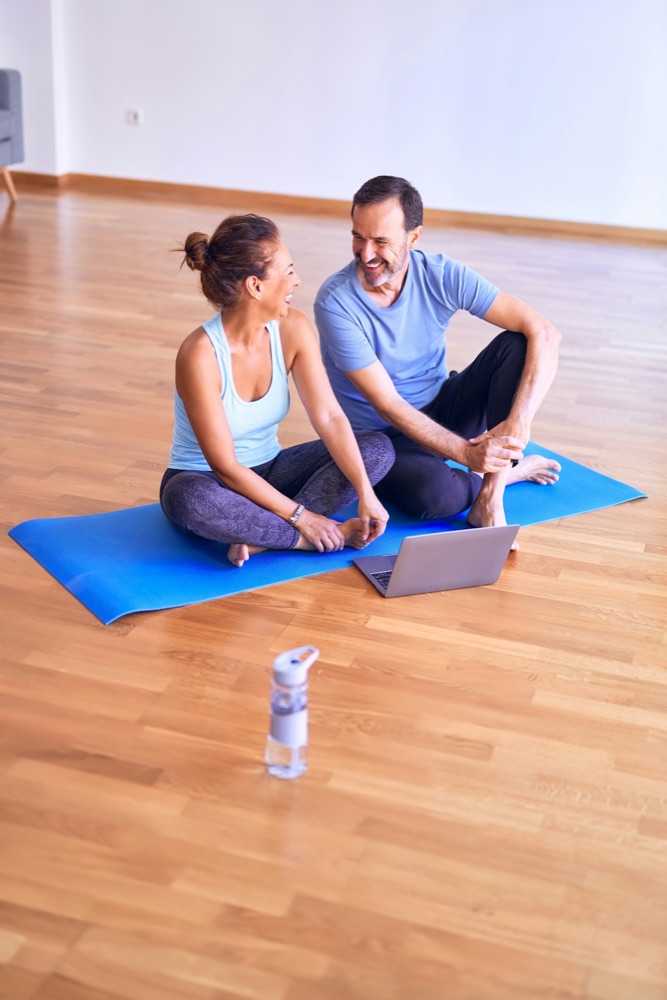
A few weeks with a good teacher is the best start you can give yourself. A teacher corrects the alignment that keeps joints safe and adapts poses to your body, which videos cannot do. What to look for:
- Classes labelled gentle, beginners, chair yoga or yoga for seniors.
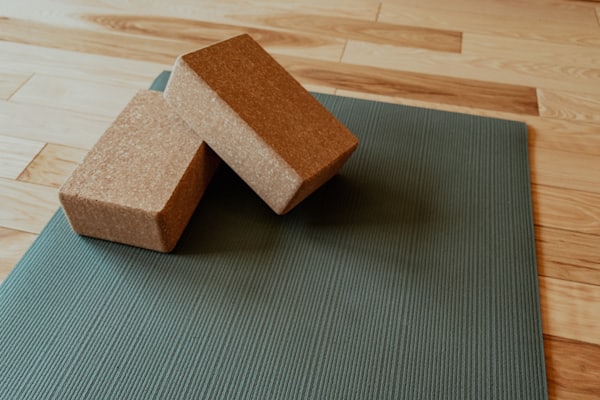
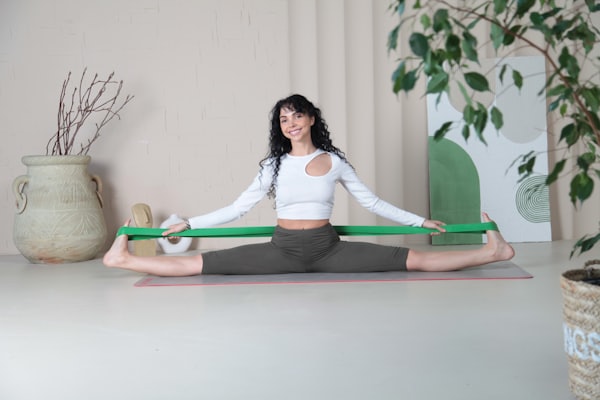
- Hatha or Iyengar-based classes, which move slowly and use props such as blocks, straps and chairs freely.
- Small classes, where the teacher can watch you and will ask about injuries and health conditions before you start.
- Avoid fast, heated or advanced classes until you know how your body responds.
How far it can go
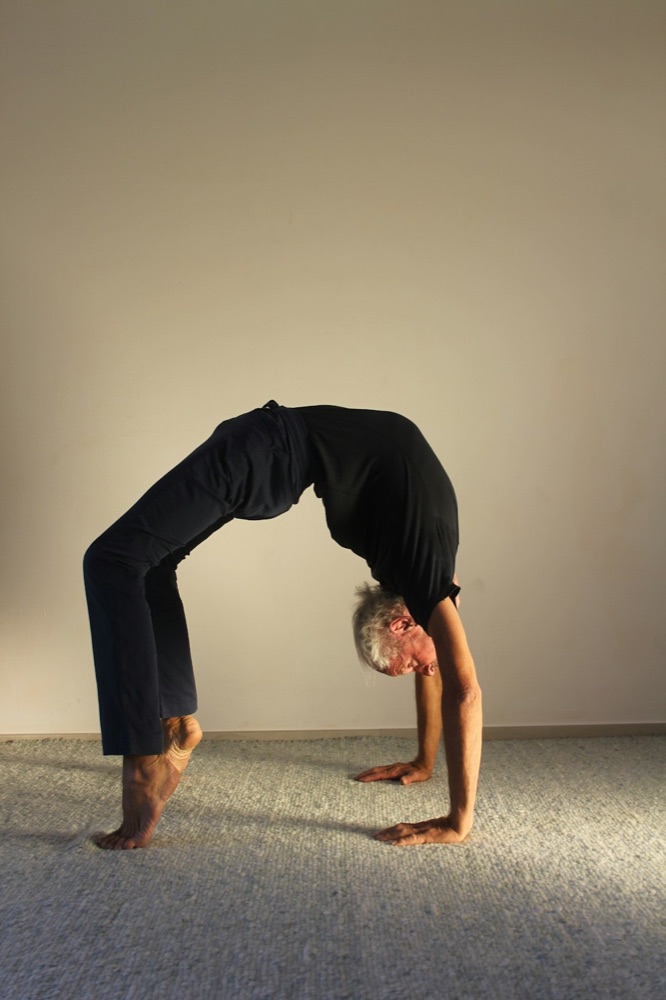
Some people discover yoga at 50 and are still deepening their practice decades later. A pose like the one pictured is the result of years of steady, careful work — not a goal for your first year, and not a requirement for any of the benefits in this guide.
What it does show is that the body keeps responding to practice for a very long time. Whatever your starting point, regular practice usually means a little more ease next year than you have now.
The bottom line
Yoga after 50 is less about flexibility than about staying capable: steadier on your feet, stronger getting up from a chair, easier in your back and calmer in your head. The evidence supports modest, real benefits — the kind that add up over years. Start gently, practise balance most days, skip the risky poses, and find a teacher who adapts the class to you.
When you want more time and focus than a weekly class gives you, a gentle retreat lets you practise every day with expert guidance. Look for programmes that describe themselves as beginner-friendly or restorative, and ask the school about your health before you book.
Enjoyed this guide?
Get new retreat guides and yoga travel tips by email — no spam.
Unsubscribe any time by writing to support@yogastay.app.
Ready to find your retreat?
Browse verified yoga schools and retreats worldwide. Send a free enquiry → the school confirms → you pay the school directly.
Browse retreats →Frequently asked questions
Is it too late to start yoga at 50, 60 or 70?
No. Yoga can be adapted to almost any starting point, including chair-based practice. Start gently, ideally with a teacher, and tell them about any health conditions before your first class.
What is the best type of yoga for older adults?
Gentle, beginners, chair yoga, Hatha and Iyengar-based classes are usually the best fit, because they move slowly and use props for support. Avoid fast, heated or advanced classes at first.
How often should I do yoga after 50?
Short, regular practice works better than occasional long sessions — 15 to 20 minutes on most days is a good aim. The WHO recommends balance and strength training on at least three days a week for adults aged 65 and over.
Can yoga help with balance and preventing falls?
Yoga trains balance, leg strength and body awareness, which all help you stay steady. Practise balance poses with a wall or chair for support, and progress gradually.
Which yoga poses should older people avoid?
Treat headstand and shoulderstand, forceful breathing exercises, deep forward folds and strong twists (with osteoporosis), head-down poses (with glaucoma) and hot yoga (with heart conditions) with caution, and check with your doctor first.