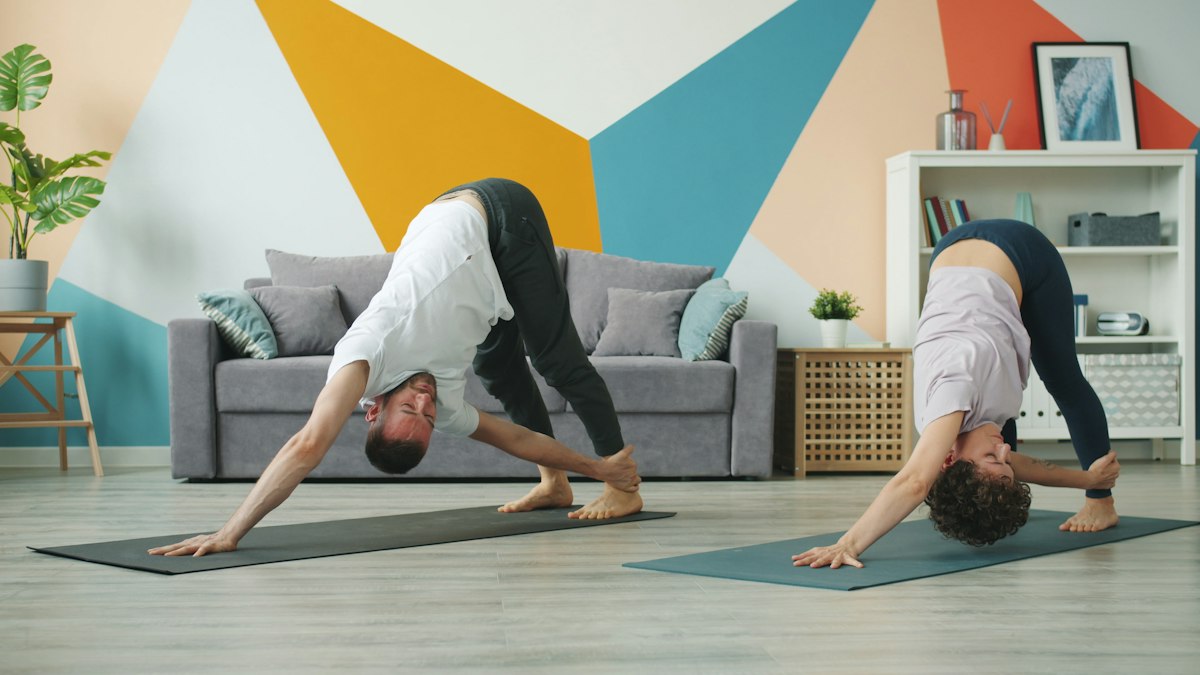
What the research actually says
The most-cited evidence comes from a study published in The Journal of Sexual Medicine in 2009, summarised by Harvard Health. Forty healthy women aged 22–55 followed a 12-week programme of daily yoga — 22 poses chosen to affect abdominal and pelvic muscle tone, digestion, joint function and mood.
By the end, the women reported improvements across all six standard domains of sexual function — desire, arousal, lubrication, orgasm, pain and overall satisfaction — and nearly 75% said they were more satisfied with their sex life. Interestingly, women over 45 saw the biggest gains.
The honest caveat matters just as much: the study was small and had no control group, so it can't prove yoga was the cause. The researchers themselves flagged these limits and called for larger, controlled trials. Treat the findings as encouraging and plausible — not as settled proof.
How yoga might help — the plausible mechanisms
Even where the direct evidence is thin, the why is reasonable, because yoga improves several things that genuinely underpin a healthy sex life:
- Circulation: movement and gentle backbends improve blood flow, including to the pelvis — and good circulation matters for arousal in every body.
- A stronger, more aware pelvic floor: yoga builds awareness and tone in the deep core and pelvic-floor muscles (in yoga terms, mula bandha), which are directly involved in sexual function and sensation.
- Less stress: yoga is well shown to ease anxiety and lower stress. Since stress and a racing mind are among the biggest libido-killers, calming the nervous system is one of the most useful things it does here.
- Flexibility and stamina: more open hips, a supple spine and better endurance simply make physical intimacy more comfortable and less effortful.
- Body awareness and confidence: perhaps the quiet star — yoga builds a kinder, more present relationship with your own body, and feeling at home in your skin tends to translate directly into the bedroom.
Gentle poses to explore
You don't need a special ‘sex yoga' routine — the everyday poses that open the hips, mobilise the spine and improve circulation are exactly the ones that help. A few worth focusing on, all beginner-friendly:
Cat–Cow (Marjaryasana–Bitilasana)
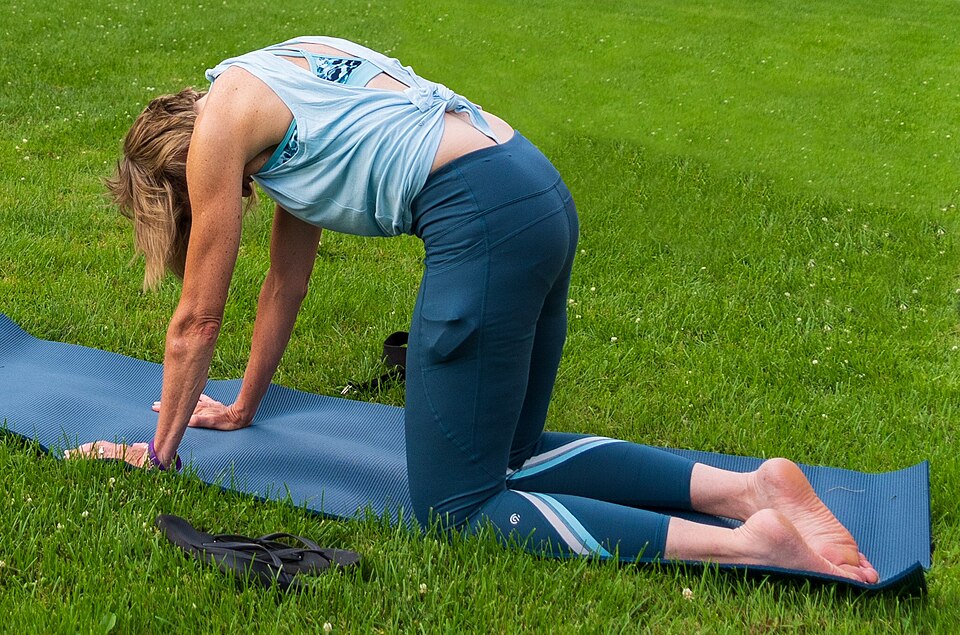
On all fours, let the spine and pelvis curl and uncurl with the breath. Beyond warming the back, the gentle pelvic tilting builds awareness and mobility right where you want it, and links movement to breath.
Cobra (Bhujangasana)
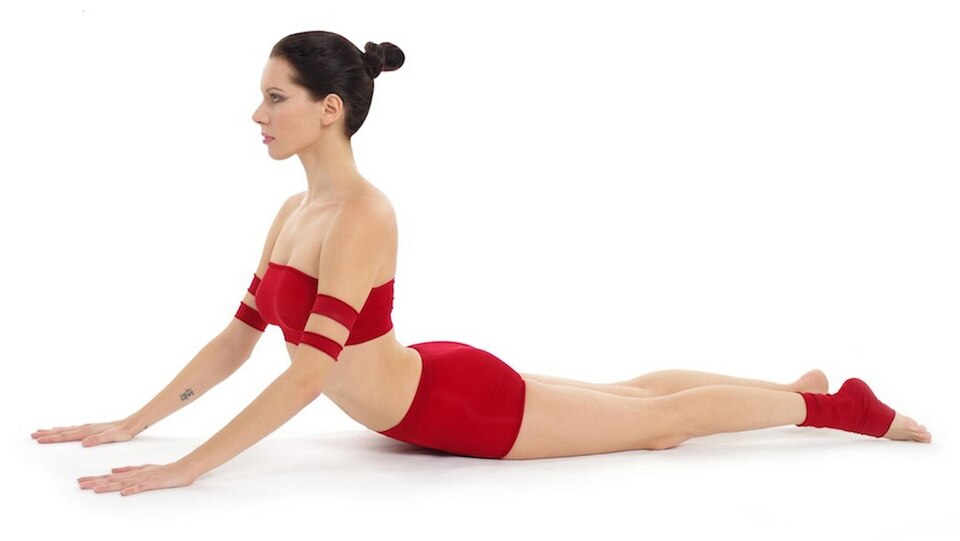
A gentle backbend that opens the chest and the front of the body, encourages circulation and counteracts the closed-off, rounded posture of desk life. Lead with the heart, keep the hips grounded, and never force the lower back. Triangle Pose (Trikonasana) and a supine spinal twist — two of the poses named in the study — work in the same spirit.
Bound Angle (Baddha Konasana) & Bridge (Setu Bandha)
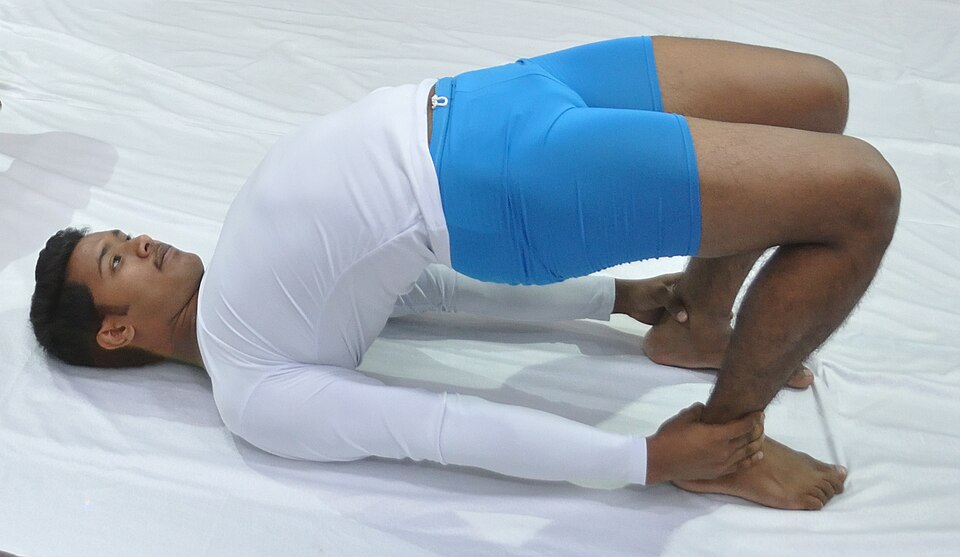
Bound Angle (Cobbler's Pose) — soles together, knees falling wide — is a classic hip-and-groin opener you can hold and breathe into. Bridge lifts the hips and is one of the best poses for consciously engaging and releasing the pelvic floor while gently opening the front of the body. Together they cover hip mobility and pelvic-floor awareness, two of the most relevant areas.
Breath and the pelvic floor
Two subtler practices tie it all together. First, slow breathing — long, easy exhales down-shift the nervous system out of stress mode, which is often the real barrier to desire and presence. Second, gently engaging and releasing the pelvic floor (mula bandha) on the breath builds the control and awareness that sensation depends on. Practise the engagement lightly and, just as importantly, practise the full release — chronic tension helps no one.
Bringing that same slow, present attention off the mat is arguably the whole point: intimacy, like yoga, is better when you're actually in your body rather than in your head.
Practising with a partner
Yoga can also be something you share. Simple partner practices — sitting back-to-back and matching your breathing, or gentle assisted stretches — build the exact things intimacy runs on: communication, trust, patience and unselfconscious touch. It doesn't need to be advanced or acrobatic; a few quiet minutes of breathing together counts. Keep it playful and pressure-free.


An honest note
Yoga is a healthy, low-risk way to support your body, your stress levels and your confidence — all of which can help your sex life. But it is not a treatment for medical conditions. Persistent pain during sex, erectile difficulties, a marked loss of desire or other ongoing problems deserve a conversation with a doctor, and pelvic-floor issues are often best addressed with a specialist physiotherapist. Think of yoga as a genuinely useful complement — one that helps most when the basics of health, sleep, connection and communication are in place too.
Ready to find your retreat?
Browse verified yoga schools and retreats worldwide — accommodation included, no booking fees.
Browse retreats →Frequently asked questions
Does yoga really improve your sex life?
There's encouraging early evidence — a small 2009 study found nearly 75% of women reported greater sexual satisfaction after 12 weeks of daily yoga — but it was small and uncontrolled, so it isn't proof. What's clearer is that yoga improves circulation, pelvic-floor awareness, flexibility, stress and body confidence, all of which plausibly support a healthy sex life.
Which yoga poses are best for a better sex life?
Hip-openers and gentle backbends are the most relevant: Bound Angle (Cobbler's Pose), Bridge, Cat–Cow, Cobra, Triangle and gentle spinal twists. They improve hip mobility, pelvic-floor awareness and circulation. Slow breathing and light pelvic-floor engagement (mula bandha) complete the picture.
Is there evidence for men too?
Most of the best-known research so far has been in women. Some smaller studies have looked at men, and the general mechanisms — circulation, stress reduction, pelvic-floor tone — apply to everyone, but the direct evidence is still limited for all genders.
Can yoga replace medical treatment for sexual problems?
No. Yoga is a healthy complement, not a treatment. Persistent pain, erectile difficulties or a marked loss of desire should be discussed with a doctor, and pelvic-floor concerns are often best handled by a specialist physiotherapist.